
- 53 Views
- 3 Min Read
- (0) Comment
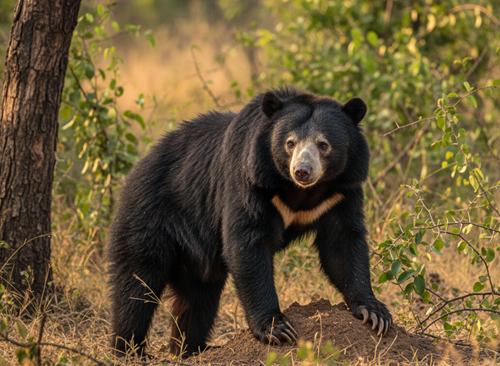
Deep within Sri Lanka’s dry zone forests roams a remarkable creature draped in long, shaggy black fur—the Sri Lankan sloth bear (Melursus ursinus inornatus). As the island’s only wild bear species, this endemic subspecies is instantly recognizable by its distinctive V- or Y-shaped cream marking on its chest and uniquely adapted snout with a mobile lower lip. Unlike the fierce predatory image often associated with bears, sloth bears have evolved as specialized insect hunters, using their powerful claws and keen sense of smell to locate termite mounds and ant colonies. Weighing between 55 and 140 kg depending on sex, these nocturnal wanderers represent one of Sri Lanka’s most fascinating yet elusive mammals.
Nature’s Insect Specialist
The sloth bear’s entire anatomy tells the story of evolutionary specialization. Their long, curved claws are perfect excavation tools for tearing apart termite mounds and rotting logs, while their mobile lips and ability to close their nostrils allow them to create a vacuum-like suction to draw in insects. Termites and ants form the cornerstone of their diet, supplemented seasonally by fruits like palu, wood apple, and kumbuk, as well as honey raided from wild bee hives. This omnivorous flexibility, with a strong insectivorous preference, sets them apart from most other bear species. Their shaggy coat, which might seem impractical in tropical heat, actually serves as excellent protection against the stings and bites of their prey, making them supremely adapted to their ecological niche.
A Mother’s Devotion
Among the most endearing aspects of sloth bear behavior is the extraordinary maternal care mothers provide to their cubs. Female sloth bears typically give birth to one or two cubs after a gestation period of six to seven months, raising them alone in secure dens within caves or rock crevices. What makes these mothers truly unique among bears is their habit of carrying cubs on their backs—a behavior not commonly seen in other bear species. Cubs ride their mother’s back for protection during the first six to nine months, learning the complex skills of foraging while staying safe from potential predators like leopards. This extended parental care, lasting up to two and a half years, ensures cubs are fully prepared for the solitary life that awaits them in Sri Lanka’s challenging wilderness.
Living on the Edge
Despite their impressive adaptations, Sri Lankan sloth bears face an uncertain future, classified as Vulnerable due to mounting human pressures. Habitat destruction from deforestation and agricultural expansion has fragmented their traditional ranges across the dry and intermediate zones, bringing bears into closer contact with human settlements. These encounters often end tragically for both species—sloth bears, despite their generally shy nature, can become dangerously aggressive when surprised or threatened, leading to serious injuries and fostering fear among rural communities. Additional threats include poaching for body parts used in traditional medicine, road kills in areas where highways cut through bear habitat, and the overall loss of the rocky caves and forest corridors they depend upon for survival.
Encountering the Elusive
For the fortunate wildlife enthusiast, spotting a sloth bear in its natural habitat ranks among Sri Lanka’s most thrilling wildlife experiences. Yala National Park, Wilpattu, and Wasgamuwa offer some of the best opportunities to witness these shaggy giants, particularly during early morning or late evening hours when they emerge from their daytime retreats to forage. Parks like Kumana, Gal Oya, and Maduru Oya also harbor healthy populations, though sightings remain rare and unpredictable due to their nocturnal habits and wary nature. Conservation efforts in these protected areas are crucial not only for the bears themselves but for maintaining the ecological balance of Sri Lanka’s dry zone ecosystems, where these unique insectivores play an important role in controlling termite populations and dispersing seeds through their fruit consumption.
Leave a comment: