
- 3 Views
- 4 Min Read
- (0) Comment
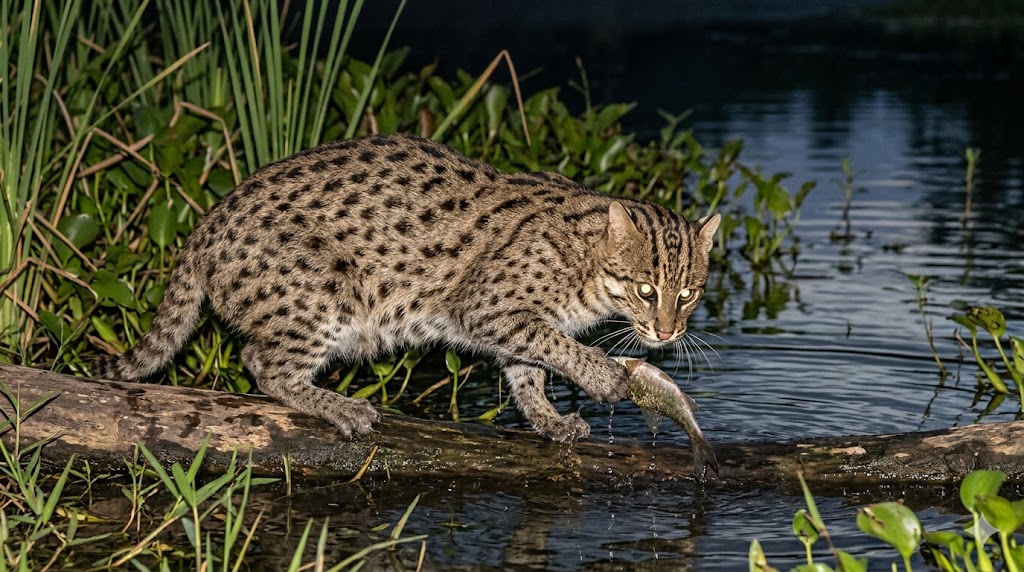
Most cats are legendary for their intense dislike of water. However, deep within the water-logged reed beds of Colombo and the dense coastal mangroves of Sri Lanka, lives a spectacular rule-breaker. The fishing cat (Prionailurus viverrinus), known locally in Sinhala as the හඳුන්දිවියා (Handun Diviya), is a medium-sized wild feline that doesn’t just tolerate water—it has completely mastered it.
While Sri Lanka is world-renowned for its big leopards, the island also supports one of the most critical global island populations of this highly specialized, semi-aquatic predator. Operating under the cover of darkness, the fishing cat is a silent, beautifully adapted phantom of the wetlands.
Built for the Deep End
At first glance, the fishing cat looks remarkably robust. Reaching a shoulder height of 35 to 40 cm, they feature a stocky, long-bodied build and comparatively short, powerful legs. Adult males are visibly larger and more muscular, weighing between 8 to 14 kg, while the slighter, more compact females weigh 5 to 9 kg.
Every inch of their anatomy is fine-tuned for an aquatic lifestyle:
-
The Flippers: Their paws feature slightly webbed skin between the toes. This unique trait acts like a set of built-in flippers, helping them propel smoothly through open water channels and navigate thick, sinking mud without getting stuck.
-
The Rudder: Unlike long-tailed tree-dwelling cats, the fishing cat’s thick, muscular tail is short—roughly half its head-to-body length (25 to 30 cm). When swimming, they use this specialized tail effectively as a steering rudder.
-
The Wet Suit: Their coarse, olive-gray to ash-buff coat is tightly packed and water-resistant. Adorned with solid black spots and longitudinal stripes running along the head and neck, it keeps their skin dry while breaking up their outline in the shadows.
The Solitary Angler
Fishing cats are strictly solitary and highly territorial animals. Adults live entirely alone, marking their expansive wetland territories with urine and scent marks, only interacting briefly during the breeding season.
They are primarily nocturnal and crepuscular, coming alive at dusk to hunt without detection. Instead of stalking land prey, this clever feline sits patiently on rock ledges or logs hanging directly over the water’s edge.
[Cat hovers over water edge] ➔ [Taps surface to mimic insects] ➔ [Dives headfirst / Scoops fish with paws]
When a snakehead, tilapia, or marsh frog swims too close, the cat strikes with lightning speed. They will frequently dive headfirst directly into deep water or use their paws to scoop freshwater crabs, crayfish, and snails right onto the muddy bank. When opportunity knocks, they will also take down pond herons, waterhens, field mice, and occasionally even young fawns.
Cryptic Calls and Marsh Nurseries
Though they look like standard cats, fishing cats have a unique vocal repertoire. When threatened, they hiss and growl, but during moments of excitement or mating, they emit a deep, guttural, demanding barking or “chuckling” call that sounds remarkably un-feline.
While breeding can happen year-round, a noticeable surge in mating and births occurs during January and February. The mother selects a highly secure den site deep inside hollow logs, dense reed beds, or rocky crevices close to the water’s edge.
Following a gestation period of roughly 2 to 2.5 months, she gives birth to a litter of 1 to 3 tiny, blind kittens. Even at birth, their tiny webbed paws are visible. Raised exclusively by the female, the kittens learn to play in shallow water within just a few weeks. The mother introduces small bits of fish and frogs at 4 to 6 weeks, teaching them complex aquatic hunting techniques until they fully mature and strike out on their own at around 10 months of age.
A Crisis in the Shallows
Despite being incredibly resilient—surviving across the wet, dry, and intermediate zones wherever water exists—the fishing cat faces a fragile future. Globally listed as Vulnerable by the IUCN, they are heavily threatened within Sri Lanka by rapid environmental changes.
Wetland Reclamation: The draining and filling of marshes for commercial building projects and urban expansion completely destroys their core hunting grounds.
Roadkills: Because these cats travel through fragmented urban green patches and must cross busy highways dividing the wetlands, they are frequently hit and killed by speeding vehicles at night.
Retaliatory Killings: Due to their spotted coats, frightened locals frequently misidentify them as dangerous leopards or target them out of frustration for raiding backyard poultry cages, leading to illegal trapping and poisoning.
| Fact File | Fishing Cat Specifications |
| Scientific Name | Prionailurus viverrinus |
| Dietary Habit | Carnivorous (Predominantly freshwater fish and amphibians) |
| Lifespan | 8 to 10 years in the wild (Up to 15 years in captivity) |
| Major Natural Predators | Sri Lankan leopards and large mugger crocodiles |
Where to Look for the Marsh Phantom
Remarkably, their most significant populations thrive within the wet zone—frequently right under the noses of urban residents. They are regularly recorded in the Diyawanna Oya marshes around Colombo (Sri Jayawardenepura Kotte), the Anawilundawa Wetland Sanctuary, Bundala National Park, and the rural outskirts of Kandy and Nuwara Eliya. Protecting these urban wilderness pockets is the ultimate key to ensuring Sri Lanka’s unique fishing cat keeps swimming.
Leave a comment: