
- 40 Views
- 4 Min Read
- (1) Comment
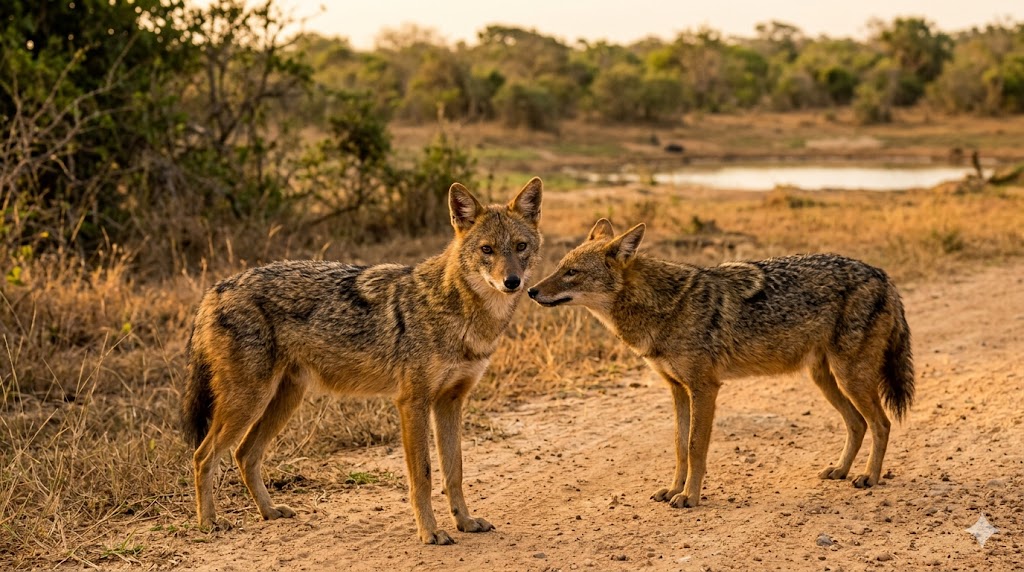
As the blinding dry zone sun dips below the horizon and the heat breaks into twilight, a chilling, synchronized chorus rises over the plains. It begins as a solitary, long-drawn howl, instantly punctuated by a series of sharp, high-pitched yelps. For anyone camping near the borders of Sri Lanka’s national parks, this is the definitive evening broadcast of the Sri Lankan golden jackal (Canis aureus naria), locally known as the නරියා (Nariya).
Often misunderstood as mere opportunistic pests or cowardly thieves in local folklore, the island’s only wild canid is actually a masterclass in survival. Agile, fiercely loyal to its mate, and highly intelligent, the golden jackal operates as one of the most effective, adaptive predators navigating the lowland scrublands and intermediate zone forest edges.
The Phantom of the Open Plains
The Sri Lankan golden jackal is a native subspecies perfectly calibrated for a life of high-speed tracking and stealth. Weighing between 6 to 12 kg—with males being slightly larger and broader-headed than the slender females—they look like a delicate cross between a small wolf and a fox.
-
The Camouflaged Coat: They sport a beautiful, grizzled golden-brown coat often highlighted by a darker “saddle” of black and grey hairs running along their spine, ending in a distinctively bushy tail.
-
The Multi-Terrain Trotter: Jackals are built for long-distance endurance. You will often see them trotting with a light, bouncy gait along sandy safari tracks or across open lake beds during the cooler crepuscular hours (dawn and dusk), scanning the terrain with exceptionally sharp eyesight and highly sensitive, pointed ears.
Lifelong Partners and Subterranean Nurseries
Unlike many mammals that form loose, temporary breeding associations, golden jackals are strictly monogamous. They mate for life, mapping out and aggressively defending distinct territories as a deeply cooperative team.
While breeding can occur year-round due to the island’s tropical climate, a distinct peak in mating and denning beautifully coincides with the rainy seasons. This strategic timing ensures that when the pups emerge, the surrounding wilderness is teeming with an abundance of small prey animals.
[Mating Pair Tracks Territory] ➔ [Digs Underground Fortress] ➔ [Birth of Blind Grey Pups]
                                          │                                 │
                            Hidden under thorns/termite mounds        Coats lighten to golden
                                                                       tan by 2–3 months
To shield their three to six vulnerable pups from heavyweights like leopards and crocodiles, the parents become expert tunnel engineers. They excavate deep, underground dens hidden beneath dense thorn bushes, rocky crevices, or the hollow bases of abandoned termite mounds. These subterranean fortresses feature multiple hidden escape tunnels.
For the first six to eight weeks, the pups are blind and covered in a fine, dark grayish-brown fur coat that lacks any golden tint. By week three, both parents begin bringing home real food in a clever way: they swallow meat at a kill site and regurgitate it back at the den mouth, providing a soft, easily digestible meal for their growing family until they fully wean at three months and join the family hunts.
The Ultimate Omnivore
While classified strictly in the order Carnivora, the golden jackal’s true secret to surviving harsh dry zone droughts is its willingness to eat absolutely anything. They are equally capable hunters and opportunistic scavengers.
-
The Active Hunt: Working in pairs, they can systematically confuse and take down young spotted deer fawns, black-naped hares, and ground-nesting birds.
-
The Coastal Scavenger: In coastal parks like Bundala or Yala, they patrol waterholes and lagoons, eagerly snatching stranded fish, frogs, and monitor lizards.
-
The Seasonal Sweet Tooth: When the Palu (Manilkara hexandra) trees drop their sweet, sticky yellow berries, jackals will temporarily abandon the hunt to forage peacefully beneath the canopies alongside deer and wild boars.
Nights in the Shaded Thickets
Outside of the intense denning season, golden jackals maintain a nomadic lifestyle within their territories and build no permanent structures. During the intense midday heat of the dry zone, they retreat into the deep shade of dense scrub thickets or slip into abandoned animal burrows to rest and stay cool. As dusk approaches, they emerge to trot along roads, grasslands, and wetlands, using their vocal yelps to re-establish territorial boundaries with neighboring pairs.
| Fact Sheet | Golden Jackal Profile |
| Scientific Name | Canis aureus naria |
| Lifespan | 8 to 12 years in the wild |
| Social Structure | Monogamous pairs / Small family units |
| Top Viewing Spots | Yala, Wilpattu, Bundala, and Udawalawe National Parks |
Catching a glimpse of a jackal pair pausing in the golden light of a Yala morning, their ears pricked forward before they melt silently into the low scrub, is a beautiful encounter with one of Sri Lanka’s oldest, cleverest survivors—the true voice of the dry zone night.

Comment 01
Carey931,
10 October, 2026https://web-tool.hashnode.dev/how-facebook-reels-audio-works-m4a-vs-mp3-bitrates-and-audio-extraction-explained